


.jpeg)
Into the Ashes of 1944
.jpg)


Beyond The Ruins
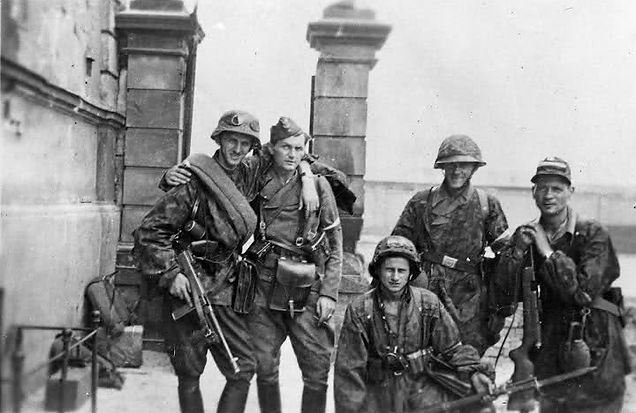
In 1944, Warsaw was systematically erased from the map. But the true tragedy wasn't the shattered brick, it was the 63 days of relentless terror endured by those who fought in the dust, smoke, rubble and war torn city. We take you past the rebuilt facades to look directly at the scars.
I reject the scripted, commercial approach to history. This isn't a generic sightseeing tour filled with sanitized myths, it is an uncompromising dive into the brutal, unvarnished truth of the 1944 Warsaw Uprising, the Wola & Ochota massacres, and the true human cost of the Eastern Front.
I focus entirely on the heavy, difficult history that standard tours avoid: the terror, the individual suffering, and the exact reality of what happened on these streets. No tourist fluff, no brief overviews, and no dilution of this sacred war.
Check my dates and contact me directly to secure a spot on the walk back into the darkest years in Eastern European history.
WhatsApp: +1 (508) 840-6090
Instagram: @sacredwartours
Email: brian@thesacredwar.com


For media content I make posts on Instagram, Spotify and blog posts on the site here.
Instagram @sacredwartours
Spotify Sacred War Tours
The Sacred War
About Me
The Story Behind The Sacred War
I’m Brian Alvarez, Orlando Florida USA based. I am a traveler at heart, also a history lover, researcher and storyteller devoted to uncovering the buried truths of Eastern Europe’s truly darkest hours. What began as a fascination with history turned into a mission: to walk the same streets where civilians once fought, suffered, and endured, and to share their stories with honesty and reverence. I’ve crossed continents chasing the traces of the Warsaw Uprising, the massacres of Wola, Ochota, Stare Miasto, and beyond not for thrill or spectacle, but to give voice to those silenced by time. The Sacred War isn’t just a project to me; it’s a promise to remember, to teach, and to connect people to the fragile, human heartbeat that still echoes beneath the ruins.
Why the Sacred War?
I know this is controversial but one must understand the overall devastation to see why. The title is deliberate and rooted in a specific historical connection. The song “Священная война” (pronounced svyash-chen-na-ya voy-na) or in English “The Sacred War” became the spiritual anthem of the partisans fighting for survival in the forests of Belarus against a war of total annihilation. That war came directly to Warsaw. The specific executioners who devastated Belarus; Oskar Dirlewanger’s SS penal brigade and Bronislav Kaminski’s SS-RONA, all under the command of SS General Erich von dem Bach-Zelewski in Belarus & Warsaw. They were the exact same units Hitler & Himmler ordered to crush the Warsaw Uprising in August 1944. They brought those same brutal anti-partisan tactics into the streets, apartments, hospitals and churches of Wola, Ochota, and Old Town. I use the name "The Sacred War" to mark this continuity of terror, honoring the reality that for the partisans whether Belarusian Soviet Partisans or Polish Home Army insurgents & soldiers, this was a sacred struggle to prevent total extinction of their people, culture, and country. Yes the Soviets were brutal to Poles and betrayed them and were monsters. But the Sacred War was not just for the Belarusians or the Soviets but I believe all of Eastern Europe and the Slavic people. It was a war of annihilation of Poles and slavic people of Russia, Belarus, Ukraine, the Baltics and the rest of the east. It was a sacred war for all.
Research & Focus
I am an independent tour guide with a deep passion for Warsaw’s World War II history, especially the 1944 Warsaw Uprising, the Nazi occupation, and the city’s tragic yet heroic resistance.
A major focus of my study centers on the SS anti-partisan campaigns across Eastern Europe and their executioners: evil men and true monsters like Erich von dem Bach-Zelewski, Oskar Dirlewanger, Bronislav Kaminski, and the Russian collaborators of the SS-RONA. I also examine the brutal Ukrainian Auxiliary police units and the complex history of the Ukrainian Insurgent Army (UPA) and their actions in Volhynia and Eastern Galicia.
Deeply Personal Roots
My research is deeply personal. Over the past years, I’ve spent time vagabonding through the historic heart of Europe’s wartime past in Prague, Budapest, Bratislava, rural Romania, Krakow, Lublin, and Warsaw many times.
My connection to Warsaw started with people, not textbooks. During my first visits, staying at a local hostel, I built strong friendships with Polish locals who remain close friends today. I fell in love with the people and the city first; the history came afterward as a calling in life. My travels have taken me across the map from Budapest and Amsterdam to Dublin, Belfast, Copenhagen, and Munich, always following the stories of conflict, resistance, and remembrance.
Blog Posts


Historical Expeditions & Routes
I do not offer generic city sightseeing, this city deserves better. My walks are designed for travelers who demand deep historical accuracy, honesty, respect, honor, and an uncompromised look at the brutality of the Eastern Front, the Warsaw Uprising, and all who perished.
Old Town Uprising Tour (Flagship Route)
Staus: Open for Bookings
A profound journey tracking the escalation of the 63-day battle. Meeting at the Uprising Monument on Długa Street, we trace the tragedy of the Field Hospital Massacre, stand on Ulica Jana Kilińskiego at the site of the catastrophic booby-trapped tank explosion, and walk the Old Town Market Place. After a breather break to mentally and physically decompress with coffee or water, the route shifts to Piłsudski Square. Here, we confront the raw eyewitness reality of the Matthias Schenk story, a dark perspective mainstream guides refuse to speak of, before moving through the ruins of the Saxon and Brühl Palaces in the gardens and concluding at the towering symbol of Polish resilience: the Prudential Building.
The Wola Massacre Tour (Coming Soon / Inquire for Custom Private Bookings):
A deeply solemn, neighborhood-specific study tracking the peak of the August 1944 atrocities. This route focuses closely on the ground operations of the Dirlewanger Brigade, the systemic execution of Warsaw's civilian population, and the hidden markers of tragedy woven into the fabric of modern residential Wola.
The Ochota Massacre Tour (Coming Soon / Inquire for Custom Private Bookings):
A specialized, localized exploration of the overlooked and largely unknown tragedy in the Ochota district. This route analyzes the brutal anti-partisan actions and terror campaigns conducted by Bronislav Kaminski and his SS-RONA (Kaminski Brigade), mapping out how a quiet, affluent neighborhood became the epicenter of extreme brutality and an existential struggle for survival.
How to Arrange a Tour
Because these routes are highly specialized, dark & graphic and strictly limited to small groups, bookings are handled exclusively through direct consultation. Reach out to me directly on WhatsApp, Email, or Instagram to secure your spot.

Discover The Dark History of Warsaw


Discover The Truth of Warsaw
Join me as we walk the streets of this vibrant, modern, safe, clean, rebuilt capital to understand the profound human cost of the Eastern Front. Moving past the standard political narratives, my specialized adventures explore the raw, interconnected history of wartime Poland and Belarus.
The Specialized Focus Areas Include:
-
The True Story of the 1944 Warsaw Uprising: A deep dive into the 63 days of civilian and partisan resistance.
-
SS Anti-Partisan Operations: Tracking the continuity of brutal terror from the forests of Belarus to the streets of Old Town, Wola and Ochota.
-
The Soviet NKVD Presence: Uncovering the systematic suppression of the Polish underground from the east before, during and post-war
Join me to walk the streets of this resilient capital and understand the profound human cost of the Eastern Front, exploring the raw, interconnected history of wartime Poland and Belarus.